Introduction
- Kathryn Santner
- Karina H. Corrigan
- Jorge F. Rivas Pérez
In 1662, the Franciscan friar Bartolomé de Letona wrote of Manila, “All things necessary to human life [are found there] and even articles of superfluity, ostentation, pomp, and luxury. . . . The diversity of the peoples . . . who are seen in Manila and its environs is the greatest in the world.”1
Letona’s wonder was echoed by other early modern chroniclers who remarked on the cosmopolitanism of the city, its multiethnic populace, and the quantity of finished goods, spices, gems, and other global curiosities that could be found there. The Italian adventurer Giovanni Francesco Gemelli Careri, writing in Giro del Mondo (1699), was even more fulsome in his description:
For here are found the Silver of New Spain and Peru, and for the East, the Diamonds of Golconda, the Rubies, Topazes, Sapphires, and precious Cinnamon of Ceilon; the Pepper of Sumatra and Java; the Cloves and Nutmegs of the Molucos, the Pearls and rich Carpets of Persia; the fine Silks and Stuffs of Bengala; the Camphir of Borneo, the Benjamin and Ivory of Camboia; the Musk of Lequios; the Silks, Muslins, Callicoes, and Quilts, with the curious Purcellane, and other Rarities of China. When there was a Trade with Japan, there came from thence every Year two or three Ships, and brought pure Silver, Amber, Silks, Chests, Boxes, and Boards of precious Wood, delicately varnish’d; in exchange for Hides, Wax, and the Fruit of the Country.2
From Manila’s Parián market—the Philippine clearinghouse for exports from across Asia—these riches were transshipped to the Americas. Having survived the treacherous journey on a galleon across the Pacific, these novel and sumptuous goods were unloaded in Acapulco and transported to the capital of New Spain and across the viceregal territories and beyond. For over two hundred fifty years, this trade, both licit and clandestine, connected vast distances, goods, and peoples.
Compelled by the ambition and precarity of the venture and the great wealth and human suffering that it embodied, historians have long been drawn to the saga of the galleon trade. Art historians, in particular, have been inspired by the complex objects created within this global network of exchange—from Asian porcelains, lacquer objects, and silk to biombos, talavera poblana, and enconchados (figs. 1–3). As curators, these glittering wares inspire us for many of the same reasons that they fascinated the merchants of Manila and Mexico City and their eager clients in the Parián markets. Art history as a discipline may be reconsidering the notion of hybridity, but the plurality of these objects in motion remains a central component of their nature and enduring appeal.3
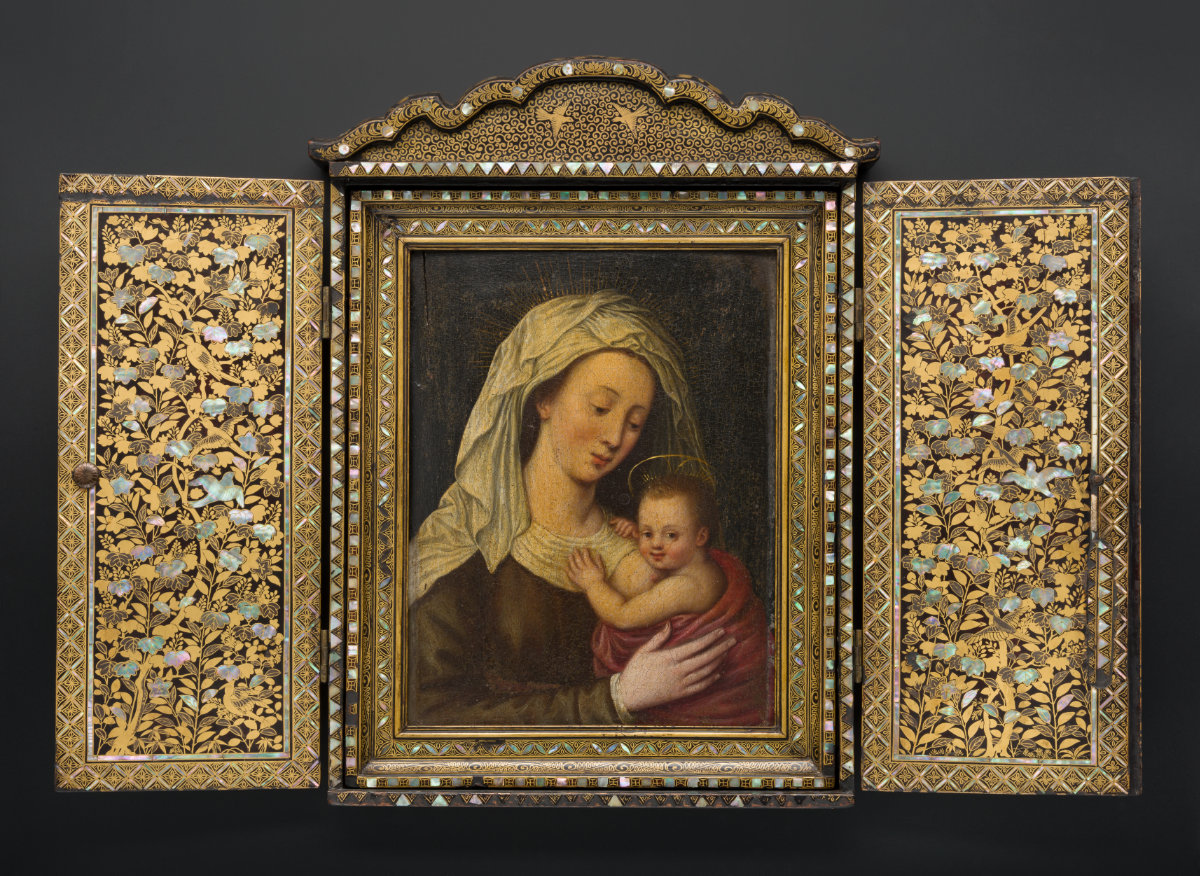
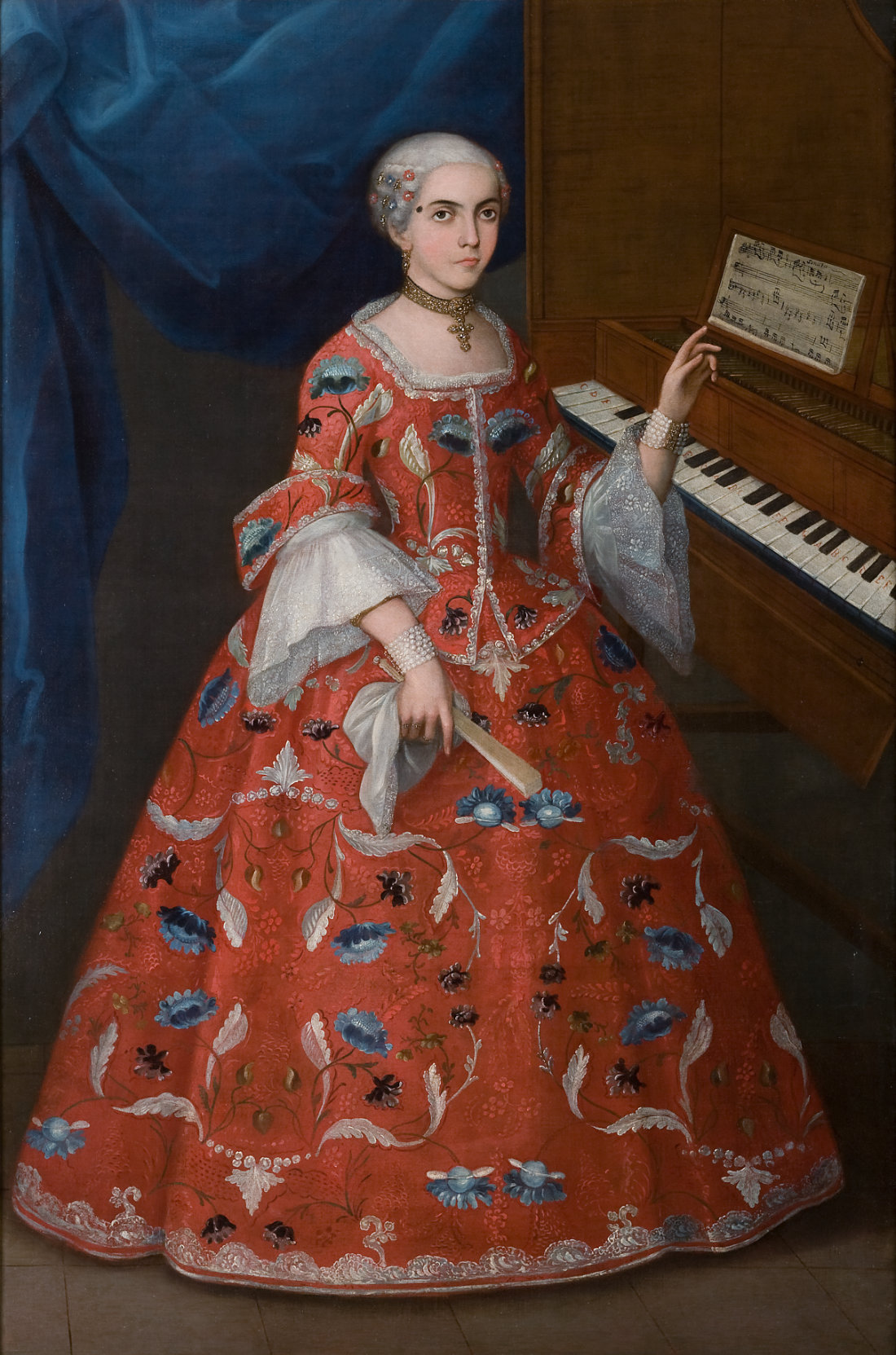
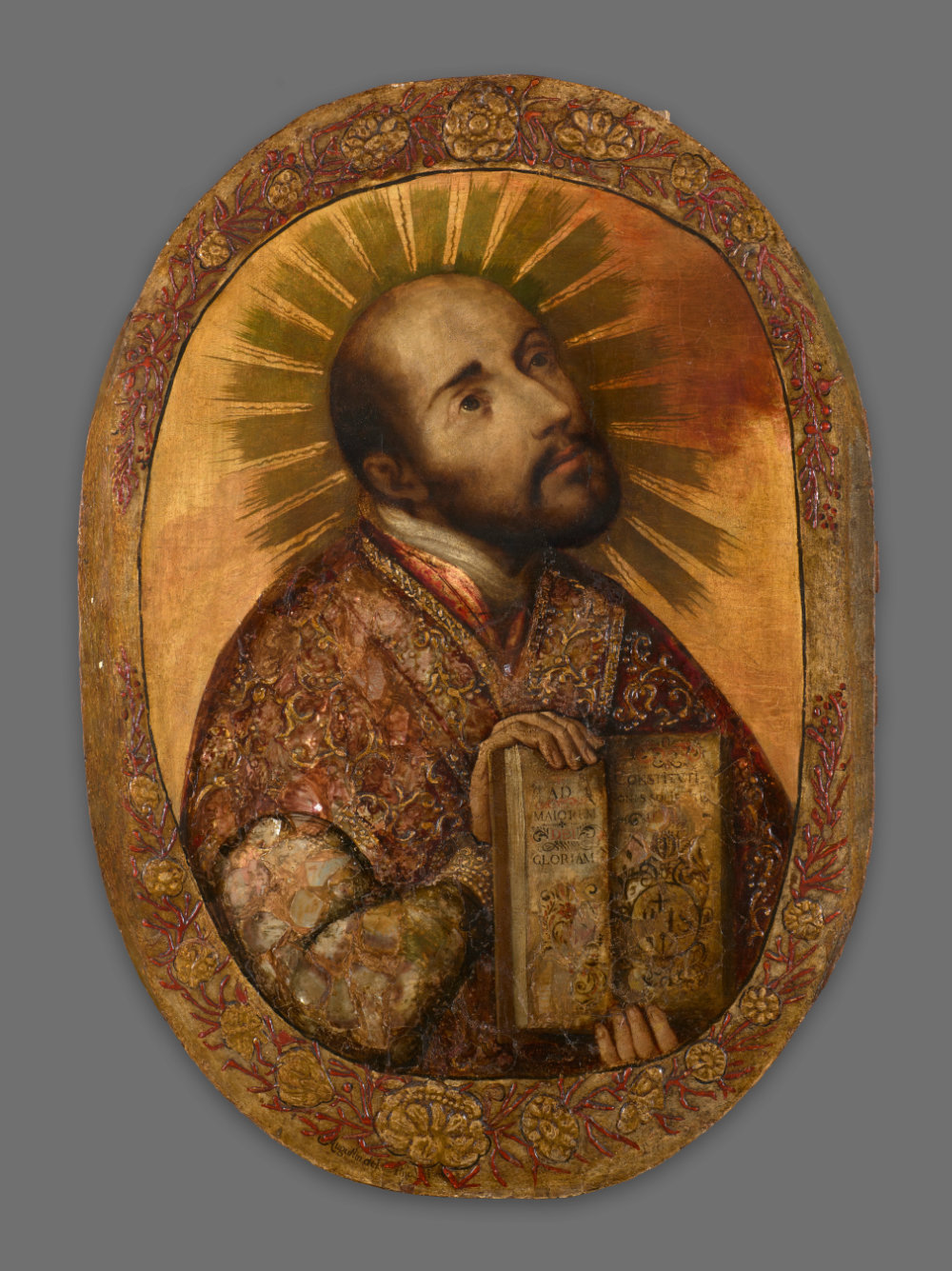
This is the third time that the Mayer Center symposium has addressed the theme of Asian and Latin American exchange. The first symposium—Asia and Spanish America: Trans-Pacific Artistic and Cultural Exchange, 1500–1850—was organized in 2006 by Donna Pierce and Ronald Otsuka. Its focus was largely unidirectional, exploring the influence of Asian goods on the furniture, decorative arts, textiles, and painting of Mexico. This groundbreaking symposium was a watershed for this emerging field. The second symposium, in 2010, At the Crossroads: The Arts of Spanish America and Early Global Trade, 1492–1850, was also organized by Pierce and Otsuka. Here, they revisited many of the themes explored in the first convening, but expanded the timeframe and markets for Asian goods to also include the impact of Asian export goods on colonial New England and the early American Republic.
Transpacific Engagements: Visual Culture of Global Exchange (1781–1869), a conference held in 2014 in the Philippines, marked another important step forward for the field. Centering both the conference in and its narrative on Manila, the organizers considered the impact of the galleon trade on artistic production within the Philippine entrepôt.4
When organizing the 2024 Mayer Center symposium, we similarly strove to center Manila within this global narrative and to expand our understanding of this complex node of exchange. One underrepresented component of transpacific studies, at least art historically, has been the impact of Latin America on the Philippines and its trading partners. The importation of raw materials from the Americas impacted local production in Asia, including the extensive use of cochineal in Chinese silks and brocades. Finished goods also flowed the other way and had a profound influence on Asian art and culture. In fact, some objects were transshipped multiple times, passing between Asian, European, and Latin American ports, finding reuse—and sometimes refashioning—in each location.
One critical advancement in the eighteen years since the first symposium is a more nuanced understanding of the vital role that China had on art and life in the Philippines during this period. Fujianese merchants and artisans living in the Philippines represented an important and sizable community; they considered Manila a central node in their expansive network of trade routes that spanned much of East and Southeast Asia.
The 2024 Mayer Center symposium brought together emerging and established scholars advancing different aspects of transpacific studies. The first two essays consider the individuals impacted by the galleon trade. Opening the volume, Diego Javier Luis’s “The Manila Galleon: An Historical Primer” provides a concise overview of this complex history and forefronts the movement of people and human costs associated with the galleon trade. He argues that we cannot consider the aesthetic and cultural impact of global trade without also considering the individual stories of loss, enslavement, and displacement associated with it.
Turning to those who enjoyed the abundance of the galleon trade, Jorge F. Rivas Pérez’s essay, “Inventories of Luxury and Wealth: Asian Trade and Material Culture in Spanish America,” mines the posthumous inventories associated with four elites in Mexico City and Lima. He interprets this rich archive to consider how Asian objects were integrated into domestic interiors and used in the Americas during the long eighteenth century.
Multiple essays in the volume focus on objects in specific media. Two center on Asian textiles. Karina H. Corrigan explores the global circulation of Chinese silk during the early galleon trade in “‘Brocades of Gold and Silver upon Silk’: A Microhistory of a Set of Chinese Silk Church Vestments for the Spanish Market.” Corrigan approaches this rare surviving set as a document, reading a history of an interwoven globe in the structure and pattern of these resplendent ecclesiastical textiles. Exploring a less well-known luxury textile, Abi Lua considers piña, the celebrated Philippine cloth made of pineapple-leaf, in “Cut from the World: Philippine Piña Fabric in the East India Marine Society Collection.” Lua documents the journey of a nineteenth-century fragment of piña from the island of Panay to Salem, Massachusetts. Collected by an American sailor in the decades after the Manila galleon route had collapsed, this piña fragment became an “article of curiosity” for scientific inquiry in the collection of the East India Marine Society, a predecessor institution to the Peabody Essex Museum.
Two essays explore artistic exchange in ceramics. In his contribution, Roberto Junco considers the importation of Chinese porcelain through surviving potsherds in “An Ocean of Blue and White: Archaeological Excavations at the Port of Acapulco.” These fragments, which likely arrived broken after their long transpacific crossing, reveal both the shifting tastes of consumers in Mexico and the styles that influenced the enterprising potters of Puebla. Deposits of these sherds have also identified the likely locations of the old fort of San Diego and the annual Acapulco Fair that assembled to distribute goods arriving on the Manilla Galleon. Margaret E. Connors McQuade considers the artisans in the colonial city of Puebla who reimagined Chinese porcelain designs on talavera in “Name that Pot! Viceregal Potters and Workshops of Puebla de los Ángeles.” Many of the Puebla potters are well-documented archivally, but it has historically been difficult to link them to specific works. Connors McQuade argues for the attribution of select works based, in part, on makers’ marks that potters incorporated into their works.
The remaining essays in the volume reflect the enduring impact of the galleon trade on cross-cultural works in a variety of media. In “For the Consolation of Manila: A Case Study of a New Spanish Image of Christ,” Ronda Kasl considers an image of the ecce homo sent to Manila to console a city beleaguered by poverty, conflict, and natural disasters. She documents the object’s creation in Mexico from cornstalk paste, its transmission on a galleon—where it gained a reputation for miraculous powers—and finally its arrival in the blighted Philippine capital, where it became an important cult image.
Kathryn Santner’s contribution, “The Other Silver Flow: Liturgical Objects in the Philippines,” discusses the production of silver by sangley and Indigenous silversmiths in Manila to satisfy the needs of the archipelago’s churches. While Chinese artisans in Manila have mostly been appraised for their work as ivory carvers, immigrants from Fujian and Guangdong were also master silversmiths and made up the bulk of the artisans in the city. These craftsmen furnished churches in the Philippines with the liturgical objects that mediated the profound sacramental relationships between parishioners and the divine.
Turning to the understudied topic of furniture in “A Cabinet of Many Cultures,” Clement Onn discusses a seventeenth-century narra wood cabinet featuring Mexican imagery of the founding of Tenochtitlan: an eagle atop a cactus flanked by the figures of a Mexica ruler (tlatoani) and a noblewoman. Onn argues convincingly for the cabinet’s production in the Philippines and, drawing on influences from European and Chinese furniture, traces the visual and tangible history of a truly global object.
In “‘Graceful, Rich, and Pleasing to the Eye’: Seamless Facture Across the Pacific,” Samuel Frédéric Luterbacher examines lacquer objects at the intersection of Japanese and Iberian aesthetics. He explores seamlessness, a flawless surface quality that resonated across cultures and obscured the labor of an object’s creation. That such facture was associated with miraculous creation and luxury goods speaks to the increasing emphasis on commodification during this time period.
Closing the volume, “Biombos in Modern Mexican Interiors,” by Aldo Solano Rojas, discusses the afterlives of biombos (folding screens) in twentieth-century domestic interiors in Mexico. Initially imported from Japan to the Americas, screens quickly became such a part of local visual culture that they came to be an emblem of Mexicanness. Modernist furniture designers and architects abstracted the form, utilizing biombos in the homes, cinemas, and hotels they designed. Their contemporary appropriation of this quintessential form attests to the enduring legacy of the galleon trade over a century after its cessation.
The 2024 Mayer Center symposium brought together scholars with diverse areas of expertise to advance transpacific material culture studies. It also sought to lay the groundwork for future exhibitions exploring this complex and fascinating narrative. In the last twenty-five years, several important exhibitions have explored the themes connected to the galleon trade.5 Most recently, Across the Pacific: Art and the Manila Galleons, organized by Clement Onn for the Asian Civilisations Museum in Singapore, offered an expansive view of the artistic cross-pollination fostered by the galleon trade. But, despite the captivating nature of objects produced over three centuries of contact between Asia, the Americas, and Europe, this subject remains unfamiliar to many American audiences. Our hope is that these proceedings will inspire new scholarship and exhibitions that will continue to mine the complex and expansive narratives of the world’s first global network.
Notes
-
Emma Helen Blair and James Alexander Robertson, The Philippine Islands, 1493–1898, 55 vols. (The Arthur H. Clark Company, 1905), 36:202, 205. ↩︎
-
John Francis [Giovanni Francesco] Gemelli Careri, “A Voyage Around the World,” in A Collection of Voyages and Travels: Some now first Printed from Original Manuscripts . . ., vol. 4 (H. C. for Awnsham and John Churchill, 1704), 444. ↩︎
-
See Carolyn Dean and Dana Leibsohn, “Hybridity and Its Discontents: Considering Visual Culture in Colonial Spanish America,” Colonial Latin American Review 12, no. 1 (2003): 5–35. ↩︎
-
Florina H. Capistrano-Baker and Meha Priyadarshini, Transpacific Engagements: Trade, Translation, and Visual Culture of Entangled Empires (1565–1898) (Ayala Foundation; Getty Research Institute; Kunsthistorisches Institut in Florenz, 2020). ↩︎
-
Important exhibitions that have previously explored these themes include El Galeón de Manila (Hospital de los Venerables, Sevilla, Museo Franz Mayer, Museo Histórico de Acapulco, Fuerte de San Diego, 2000), Made in the Americas: The New World Discovers Asia (Museum of Fine Arts, Boston, Winterthur Museum, 2015–16), Tornaviaje. La nao de China y el barroco en México (1565-1815) (Museo Franz Mayer, 2016), and El Galeón de Manila: La ruta española que unió 3 continentes en 1565 (Museo Naval, 2016–17). ↩︎